You are here

Project Updates for collection: Renewable Energy Projects

Search

Search tips:

  • This form will search for words in the title OR the description. If you would like to search for the same term(s) across both the title and description, enter the same search term(s) in both fields.
  • This form will search for any of the words you enter in a field, not the exact phrase you enter. If you would like to search for an exact phrase, put double quotes (") around the phrase. For example, if you search for Bike Path you will get results containing either the word Bike OR the word Path, but if you search for "Bike Path" you will get results containing the exact phrase Bike Path.
  1. solar on parking estimated costs

    Associated Project(s): 

    Good morning Morgan,


    I have gathered the numbers that correspond to an acre of solar cover. 


    The estimate is that an acre of solar canopy could generate 760,536 kWh annually (this estimate takes into account the weather patterns of our location and possible shading/system inefficiencies).  


    I remember you saying that right now the University pays $0.05 per kWh.  Our solar farms are charged $0.045 per kWh that they generate.  This means that $0.005 is saved for every kWh generated.  That can be used to estimate that an acre of solar canopy would save roughly $3,800 per year.  


    I thought that I would also include the National Renewable Energy Laboratory’s estimate for what a solar retailer would charge per kWh of electricity in our area: $0.036.  This would mean that $0.014 could be saved per kWh on a solar canopy system, or roughly $10,650 per acre.  


    Let me know what else I can find,


    Ryan Day

  2. Info from Andy Robinson at F&S

    I am on the team that did the Retrocommissioning project in 2018 and I would be happy to share some of our knowledge from that process.  Below is the link to a presentation of that project that we took to a Big Ten energy conference.   Some of our main takeaways are that the combination of chilled beams, dual HX wheels, coil sizing, occupancy ventilation, and thoughtful building pressurization have led to one of the most efficient buildings on campus.  Also, the heat pumps work well to heat/cool with electricity, but would be optimal if there were more of a reheat load, or a hot water loop to send reject heat to a neighboring building in summer, which campus is looking into in certain locations. 


    https://www.fs.illinois.edu/services/utilities-energy/energy-conservation/rcx-energy-results

    https://webtest2.fs.illinois.edu/docs/default-source/retro/big10-friends-mechanical-energy-conference-2018-09-30.pdf?sfvrsn=7a85cbea_2


    Andy Robinson, LEED-AP, CEM

    DDC Specialist, F&S Energy Services - RCx

  3. Discussion on geothermal policy options

    Associated Project(s): 

    Morgan White, John Summers, Jim Sims, Matthew Tomaszewski, and Kent Reifsteck met today to discuss options for incorporating geothermal information into campus policies.  The best options are to include geothermal in the Energy Use Policy, update the Campus Administrative Manual to support the updated Energy Use Policy, and include geothermal information in the Facilities Standards. A summary of existing policies and the draft iCAP 2020 objectives linked to geothermal are shown in the attached file.

    Attached Files: 
  4. Developing Local Solar Energy Resources

    Associated Project(s): 

    Join us for this seminar sponsored by local Master Naturalists. Scott R. Tess, the Sustainability & Resilience Officer for Urbana, will discuss City programming designed to develop local solar energy resources. Solar Urbana-Champaign is an ongoing program intended to both simplify the process and reduce the costs of purchasing and installing solar photovoltaic systems for homes and businesses. 


    February 17, 6:30–8 pm • U of I Extension, 801 Country Fair Dr. Champaign, IL 61821


    Amanda Christenson • Cooperative Extension Service


  5. Archive - Original Collegiate Conference Champion Award description

    Associated Project(s): 

    As a Green Power Partner, Illinois joined five other Big Ten universities in winning the EPA’s Collective Conference Champion Award. This award recognizes the collegiate athletic conference, and its member schools, with the highest combined green power use in the nation. The Big Ten’s collective green power use of more than 375 million kWh is equivalent to the electricity use of nearly 36,000 homes. - 2015

  6. Pollinator Friendly at Illinois

    University Landscape Architect, Brent Lewis, provided an overview of recent efforts to make the U of I campus more pollinator friendly at the CCNet brown bag lunch this month.  Topics included:

    1. Integrated Pest Management (IPM) Program
    2. Living Learning Labs
    3. Facilities Standards / Green Infrastructure
    4. Bee Campus USA designation
    5. Solar Farm 2.0 plantings
    6. Landscape Master Plan

    You can watch his presentation on Facebook, at https://www.facebook.com/champaigncountynetwork/videos/512740266019591/.  Join the CCNet Mailing List to stay informed about Champaign County sustainability efforts and to meet local sustainability professionals, like Brent.

  7. Twin Cities Amateur Radio welcome Solar Farm presentation

    Associated Project(s): 

    Tuesday, January 14th, Morgan White was welcomed by the Twin City Amateur Rado Club to share all there is to know about the University's first solar farm. She spoke on the process of getting such a project on campus, and the good news about a second solar farm that will be on campus by Winter 2020

  8. archived - previous project description

    Associated Project(s): 

    Excerpt from the ECE building website:

    "With the new ECE building the University is determined to achieve LEED platinum certification, and is striving for a net-zero energy design that will enable the building to supply all of its own energy. From a vast array of photovoltaic cells, to a chilled beam system to cool and heat the classroom tower, ECE wil accomplish a major campus addition with maximum space and minimal carbon footprint.

    “This is no small achievement,” explains ECE Professor Phil Krein. “Currently the Department of Energy reports only eight net-zero energy buildings in the U.S., and the largest is only 14,000 square feet. To achieve this in a building nearly 20 times that size reflects the University’s sincere commitment to sustainable design while capturing the spirit of a department that’s always pushing the limits of technological innovation.”

    In addition to its sustainable design, the building will incorporate many notable contributions of ECE faculty and staff, including the most recent LED and fluorescent lighting advances, energy conversion and systems that exploit new achievements in power electronics, and intelligent systems and interfaces that apply recent breakthroughs in computer technology. “In other words,” explains Krein, “visitors won’t just be entering the ECE building, they’ll be entering the ECE experience, enjoying the benefits of technology that had its genesis here.”

  9. CEE PBL class project

    Per the executive summary report, "One goal of the University of Illinois at Urbana-Champaign (UIUC) is reaching carbon neutrality by 2050. This is outlined in the Illinois Climate Action Plan, a proposal which also establishes a goal for annual solar energy generation. UIUC’s large energy demand poses an opportunity for implementing more cost-efficient renewable energy and increasing efficiency. The purpose of this study was to determine the feasibility of a solar canopy system with electric vehicle (EV) charging stations at a UIUC parking lot. The goal of this initiative was to reduce campus emissions, save money, and use parking lots as a place to create renewable energy."

  10. David and Sarthak's meeting notes from November 20

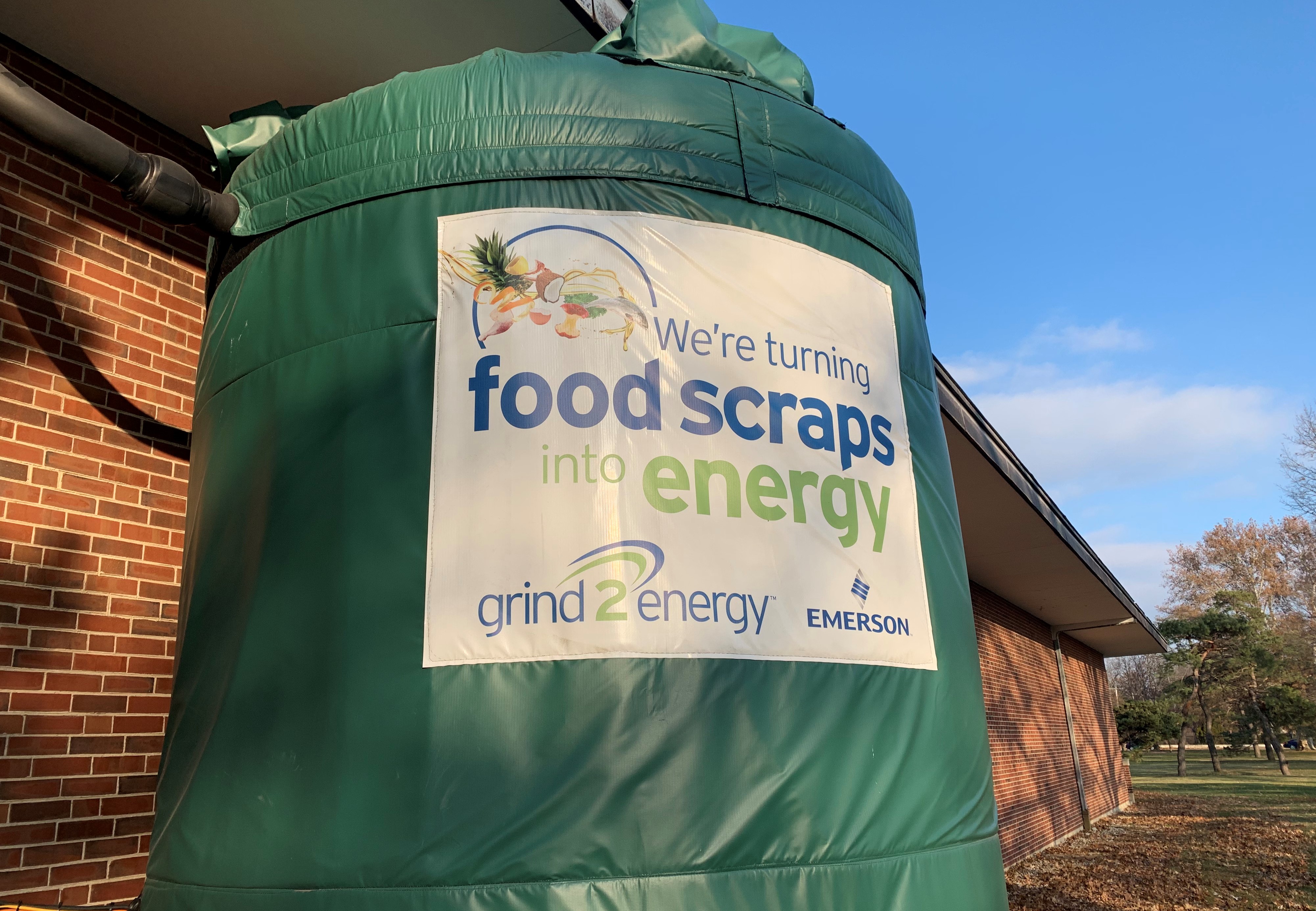
    David and I met on November 20, 2019 for our first meeting following his Biogas on Campus email on November 13th. David received an email from Doug Wolters from the College of ACES, and Doug said that he will discuss this project with his Dean. David had not heard from anyone else.

    We discussed how to proceed with this project. I will try to get in touch with Lance Schideman to get his opinion on this subject. I introduced David to the SWATeam Clerk of the Transportation and Zero Waste SWATeam, Julija Sakutyte. I will talk to the Transportation SWATeam about a possible collaboration opportunity with the Energy SWATeam and Zero Waste SWATeam. David will also talk to the Energy SWATeam about this possible collaboration.

    I have set up a biweekly meeting with David, and a monthly meeting with Meredith Moore for this project.

Pages