You are here

Project Updates search results

Search tips:
  • This form will search for words in the title OR the description. If you would like to search for the same term(s) across both the title and description, enter the same search term(s) in both fields.
  • This form will search for any of the words you enter in a field, not the exact phrase you enter. If you would like to search for an exact phrase, put double quotes (") around the phrase. For example, if you search for Bike Path you will get results containing either the word Bike OR the word Path, but if you search for "Bike Path" you will get results containing the exact phrase Bike Path.
  1. Land and Water Team February Monthly Meeting Minutes and Notes

    This month, the Land and Water iCAP Team met on Teams on February 4th, 2026, at 9:00 AM for the team's monthly meeting. In the meeting, the team discussed future goals and potential projects for students to work on throughout the semester. Some of these goals/topics include sustainable landscape improvements, green infrastructure/indigenous plantings, monitoring and cleaning the C9 parking lot for permeability, monitoring the growth of milkweed plantings across campus, measuring water use for irrigation, and furthering the goal of future use of gray water. Additionally, upcoming team-related events were discussed. Attached to this update are the agenda and notes for the meeting. 

  2. Transportation Team Meeting 2/3/26

    The Transportation Team met on Teams, 2:00 - 3:00pm on Tuesday, February 3rd.

    We heard from Xingrui Pei about the usage of Level 2 EV chargers on campus in the year 2024 and the need for expanded EV infrastructure at parking lot B4. Parking is working with a company on an app, hoping to universalize information regarding campus availability and then combine it in the Illinois app, making it easier for people to understand where there are open EV chargers and other parking information.

    We also talked with Matt Brown about partnering with Housing to pilot e-bike chargers at dormitories, which is looking promising. We will be drafting an SSC application over the next month to continue taking steps toward that.


  3. Weekly Update -- Bike Queue & Sales

    Associated Project(s): 

    Email from Jacob Benjamin:

    Happy Groundhog Day!

    Things have calmed a bit—thankfully! Warmer weather this week means I can get out and safety check the half dozen or so bikes that have been in the queue without risking frostbite.


    The numbers:

    Visitors: 32

    Sales: 704.25
    Bikes (refurb): 2 for $420
    Bikes (B-a-B): 1 for $60
    Memberships: 3 for $90


    Thanks!

  4. Weekly Update -- Start of Semester Crowd & Sales

    Associated Project(s): 

    Email from Jacob Benjamin:

    Last week we opened for the semester and were positively inundated. Wednesday saw 40+ people come through, almost all with rusty bikes from leaving them out for winter break. Fingers crossed for some legitimate storage solutions down the line…

    Friday was less busy but still all stands full for most of the day. Successfully convinced someone to tackle a build-a-bike instead of sinking time and money into a Walmart bike. I’ll call that a win!

    The numbers:

    Visitors: 60

    Sales: $471.96*
    Bikes: 2 for $420
    Memberships: 4 for $120
    Tires/tubes: 2 for $12

    *Outstanding sales are still pending, as IT issues prevented us from accepting payment on Wednesday, Jan 21st.


    Thanks!

  5. iCAP Portal Admin Meeting - January 26, 2026

    Associated Project(s): 

    Agenda

    Discussion

    • Removing inactive users
    • Metric graphs

    TODOs

    • Fix Quinn's permissions for People page
    • Test out Power BI for visualization
  6. Research on Illinois Graywater Laws and Contacts

    A student on the Land and Water iCAP team, Lillian Gilbert, conducted research on Illinois state laws on graywater usage. Currently, in Illinois, the use of graywater is prohibited by the plumbing code, making it impossible to implement a system that saves and reuses water for non-potable uses such as toilet flushing and lawn irrigation. This research project was conducted to review Illinois and other states' laws on the use of graywater in plumbing systems to help us better understand how to implement a policy allowing graywater use in Illinois. Additionally, research was conducted on other institutions across Illinois involved in water conservation issues that could serve as potential partners in changing the Illinois plumbing code to allow the use of graywater. Attached are the products of the research project, including a contact list of other Illinois institutions involved with water conservation, a list of graywater regulations from other US states, and the final research project document detailing the project's findings. 

  7. iCAP Portal Admin Meeting - January 9, 2025

    Associated Project(s): 

    Agenda

    Discussion

    • Metric review
      • [Quinn] New metric types: pie chart and stacked bar chart
      • [Sarthak] New metric display type: line chart
      • [Quinn] New metric grouping idea: display related metrics on a map w/links to each metric
        • Pedestrian/Bike counts
        • Solar, EV charging stations
        • [Michael] this could be part of a planned expansion of metric displays - pull data from multiple other metrics into a combined display (e.g. points on map, stacked bar chart, multiple lines on line chart, summation of data with matching locations on x-axis)
      • [Quinn] Some metrics already have visualizations elsewhere (e.g. pollinator areas, energy dashboard project) - just link to them instead?
        • [Michael] Broader question: should we consider using a different system for creating the visualizations (e.g. PowerBI, Tableau) and just embed them like we do videos?
        • Worth investigating - Michael will look into price/licensing, entry methods, display methods
      • [Quinn] Delete/Archive old metrics
        • Delete: recommend doing this before migration
        • Archive: save the data, decide later how to display it (e.g. CSV file linked from We've Got Data page), then delete metric
      • [Miriam] There is a lot of data that needs to be collected and shared out in other places, e.g. AASHE STARS reports, the SIMAP greenhouse gas inventory, etc. I would recommend we avoid duplicating data points on the portal as much as possible, except maybe for key data points that are very important to highlight. We can point users to other places data is tracked on the “We’ve Got Data” page.
        • Group generally agreed on reducing duplication of data entry
      • [Miriam] All metrics need to have a clear definition that explains how they are measured and sourced. We should also have consistent and clear naming practices. 
        • Important for continuity
        • Metric naming - prioritize for Objectives
      • [Miriam] Distinguishing between metrics that are true metrics in the sense that they provide measures of success toward specific goals, versus other data we want to make available but are not performance measures (like the bike counts at specific locations).
        • Consider what to do with defunct metrics for past objectives
        • Display metrics by associated category, e.g. iCAP plans, bike plan, etc.
  8. Weekly Update -- Donations & Sales

    Associated Project(s): 

    Email from Jacob Benjamin:

    This is the last week we are open for the semester. We’ve got ~17 kids bikes done and will hopefully have a few more donated this week, so between both shops our numbers should be right around 50 bikes! Weather for Saturday looks acceptable, too!

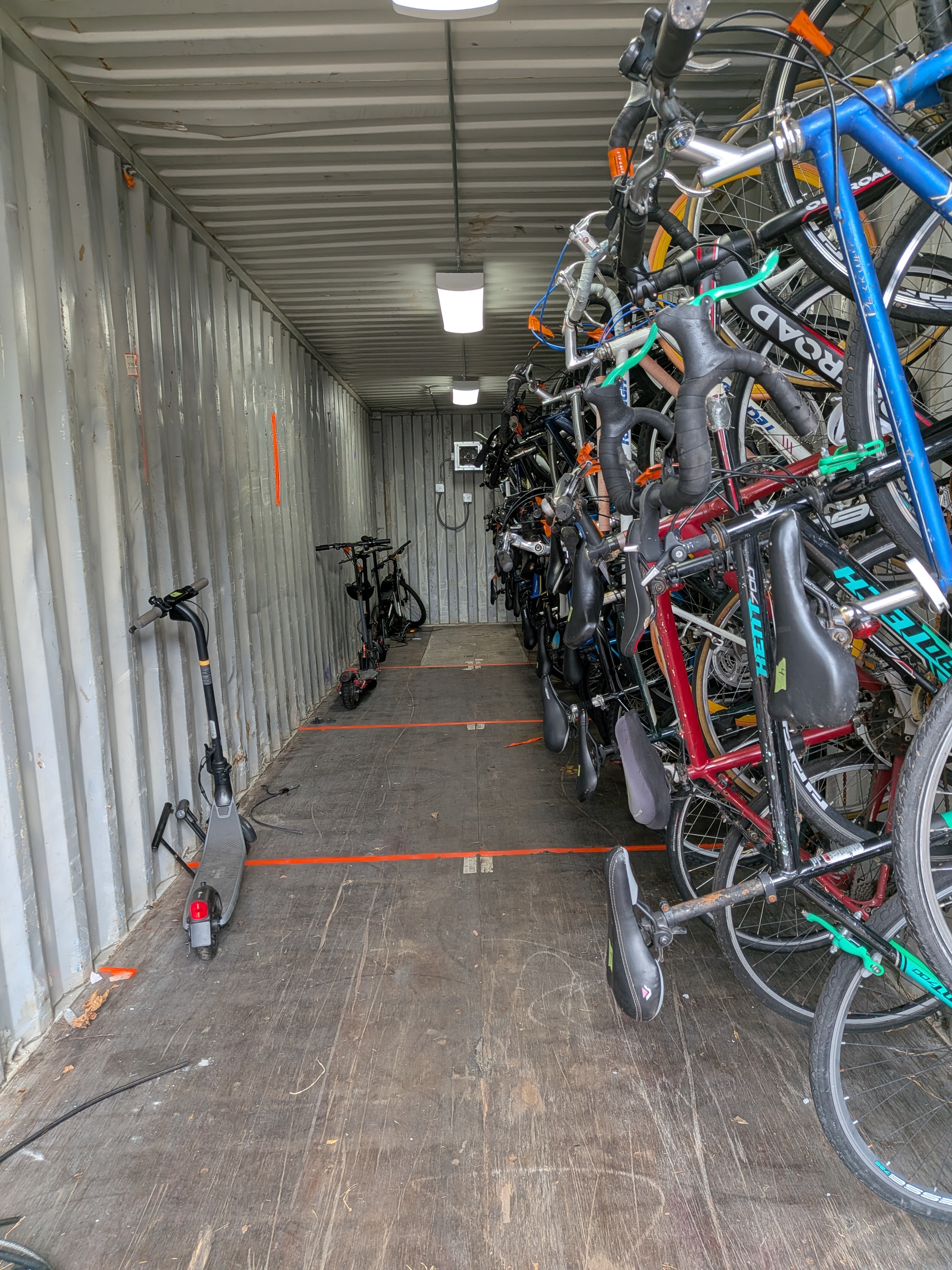
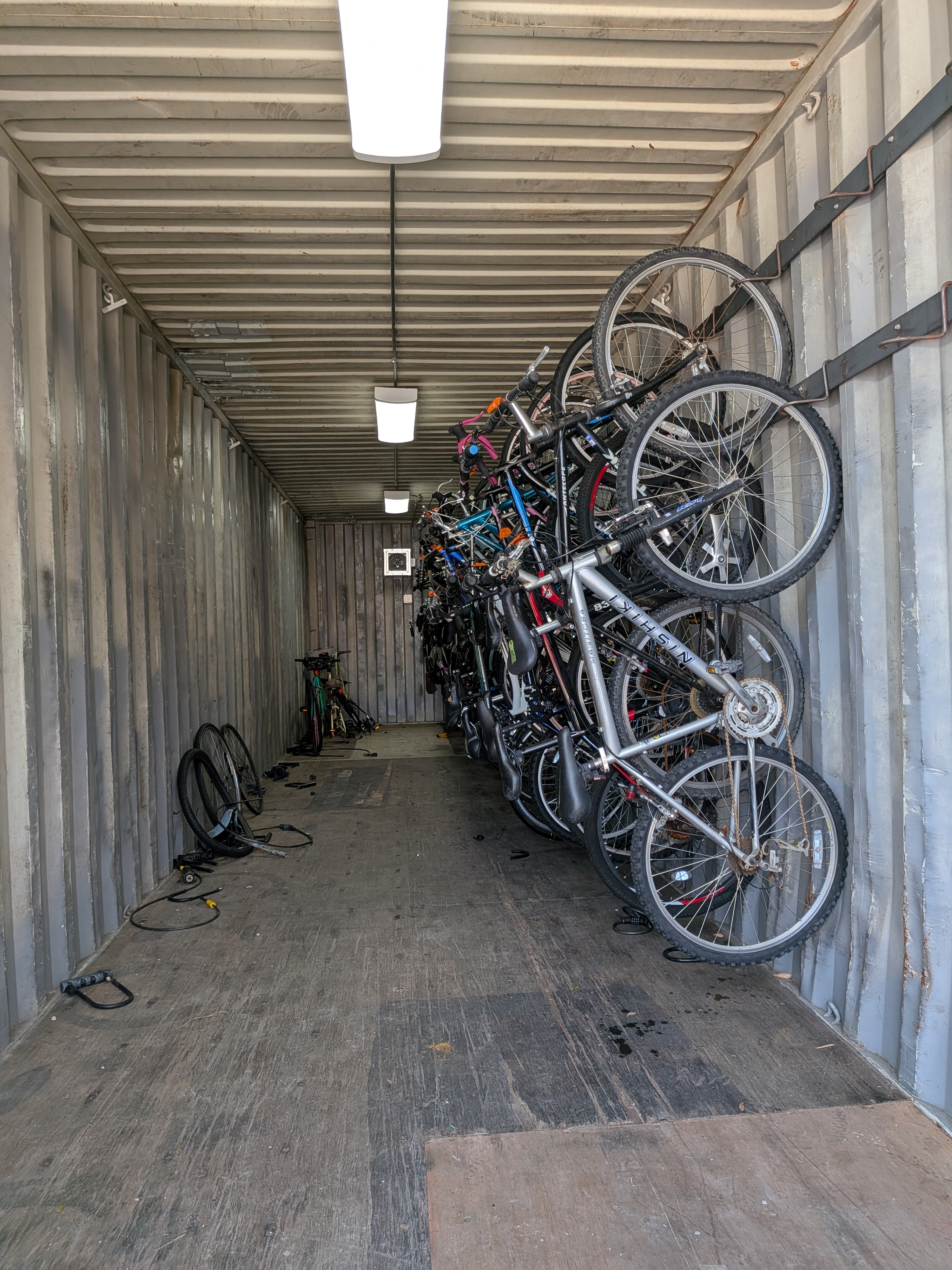
    The shipping containers are fully organized/separated. All the bikes we would like saved are in shipping container 7. This week I’ll triple check that and check with the Bike Project if they’d like to save any additional bikes.

    The numbers:

    Visitors:
    Sales: $164.50
    Memberships: 3 for $90
    Tires/tubes: 4 for $33


    Thanks!

  9. Land and Water Team December Monthly Meeting Minutes and Notes

    Associated Project(s): 

    This month, the Land and Water iCAP team met on Friday, December 12, 2025, at 2:00 PM on Teams. The team discussed several meeting topics, including a research project a student worked on regarding gray water usage at other institutions, the University's Bee Campus USA status, the implementation and planting of seeds for prairie strips, and other news and updates from other departments on campus. Attached are the meeting agenda and minutes, detailing the topics discussed during the meeting. 

  10. iCAP Portal Admin Meeting - December 12, 2025

    Associated Project(s): 

    Agenda

    • Migration question: are revisions important?
    • Remaining duplicate locations to merge (see 2024-12-11 - List of doubled projects in iCAP Portal.docx)
    • (Continue discussion) Discuss metric naming convention - follow-up from Miriam & Morgan's discussion
    • (Continue discussion) New iCAP Team
    • Question from Miriam: creating accessible meeting notes - templates, resources, etc.?

    Discussion

    • Migration question: are revisions important?
      • Ok to eschew revisions in migration
    • Remaining duplicate locations to merge
    • Discuss metric naming convention
      • Review and remove old, unused metrics
      • Review titles of remaining metrics for consistency (different naming conventions for past iCAP eras)
      • Michael will export CSV of all metrics
      • Quinn will review over the break and bring suggestions for changes
    • New iCAP Team (Sustainable Buildings) being formed - discuss what that looks like on the iCAP Portal
      • Wait for official 2026 iCAP to be released to create new group in iCAP Portal
    • Creating accessible meeting notes:
      • Check out learning resources on the Digital Accessibility site:
      • Check out CITL's Accessibility Training Opportunities – you can attend workshops to learn about document accessibility and/or watch videos from past workshops
      • Check out Accessibility Resources by role (e.g. developer, designer, content creator) for checklists and guidelines
      • Try to avoid PDFs when possible, but when necessary, making your document accessible will mean your PDF will start out mostly accessible with only minor tweaks needed (or none, for simple documents)
  11. Bicycle Reuse & Repair Programs Can Produce Environmental, Social, and Economic Benefits

    "Bicycle Reuse Programmes Report Threefold Return on Investment" by Helen Gates

    Bicycle repair and reuse programmes generate measurable economic, environmental and social returns, according to analysis by FCC Environment. 
     
    The company's white paper, Bikes: A Vehicle of Opportunity, combines operational data with external research to quantify the benefits of repair and redistribution programmes. FCC reports that across its current network, it has refurbished 2,424 bicycles through prison and community workshops, diverting 35 tonnes of waste and preventing an estimated 345 tonnes of CO₂e emissions. 
     
    New bicycle sales in the UK fell to around 1.45 million units in 2024, compared with 3.1–3.3 million during the 2020-2021 pandemic peak, according to industry data cited in the report. The Bicycle Association recorded a 7 per cent increase in workshop volumes and a 5 per cent rise in value in 2024, while many independent shops reported workshop revenue growth of 10–50 per cent. 
     
    The shift has created demand for trained mechanics, with 13-15 per cent of UK bike businesses citing staff shortages.

    Prison workshop programmes

    FCC currently operates bicycle repair workshops in nine prisons across seven local authority areas, involving around 100 prisoners. The company states that these schemes have generated £119,000 in recorded social value to date. 
     
    Research from the City & Guilds Foundation cited in the report suggests each prison skills qualification saves taxpayers an estimated £34,000 per year through reduced reoffending and related social costs. 
     
    The Wigan Cycle Project, run in partnership with Wigan Council and the charity Rebuild with Hope, has recorded a zero per cent reoffending rate among 24 participants since 2022, compared with a cited national average of 65 per cent. Between late 2024 and mid-2025, the project refurbished more than 300 bicycles and diverted 6.8 tonnes of materials from landfill. 
     
    Mark Harrison, Director of the Wigan Cycle Project, said the collaboration has "unlocked capacity to get bikes to people who really need them, while passing on new skills and prospects to prisoners preparing for release." 

    ReCycling benefits

    The report notes that the majority of a bicycle's lifetime carbon footprint is generated during manufacturing. Producing a new steel-frame bike emits around 96 kilograms of CO₂, while an aluminium equivalent exceeds 200 kilograms. Refurbishment preserves this embodied carbon, requiring a fraction of the energy needed to recycle raw materials. 
     
    Disposal data suggests significant volumes are available for reuse. The North London Waste Authority has estimated that more than 11,000 bicycles are discarded each year in the UK, while a Transport for London scoping study identified roughly 27,500 potentially discarded bikes in London alone. 
     
    External research cited in the report also highlights the economic benefits. Sustrans modelling shows that a national 40 per cent voucher scheme for low-income individuals would cost around £18 million annually but generate £60 million in benefits. Cycling UK's Big Bike Revival initiative recorded £4.30 in health and productivity returns for every £1 invested, while a Lancet study found that increasing active travel in England and Wales could save £17 billion in NHS costs over 20 years.

    Policy considerations

    The report suggests that right-to-repair legislation for household appliances demonstrates the potential for regulatory frameworks to support repair sectors. FCC argues that similar policy measures for bicycle repair could provide clarity and funding stability. 
     
    Gemma Green, Reuse Development Manager at FCC Environment, said: "Bicycle repair and reuse initiatives can address multiple challenges simultaneously – from waste prevention and skills shortages to public health and social inclusion." 
     
    The report states that bicycle reuse should be identified as a model that combines waste reduction, carbon savings and community reintegration opportunities through repair programmes


    A link to the full article can be found here.

Pages